A low quotation does not prove that an HT-LT contractor understands protection coordination, utility approvals, shutdown planning or commissioning records. Before requesting prices, you need a method for checking licences, technical competence, project interfaces, exclusions and the evidence behind each bidder’s claims.
Key takeaways
- Match the contractor’s licence and supervisor records to the contracting entity.
- Request single-line diagrams, protection studies and method statements before comparing bids.
- Compare equipment schedules, exclusions and outage plans—not only the quoted total.
- Confirm who performs testing, coordinates energisation and delivers as-built records.
Check the licence, supervisor and relevant project experience before issuing an RFQ
Reject any bidder whose statutory records do not match the entity that will sign the contract. A Class 1 electrical contractor label is not a national guarantee of HT competence; verify the following before issuing an RFQ:
1. Obtain the HT electrical contractor licence and check the issuing authority, licence number, jurisdiction, licence validity period and permitted voltage level. Confirm that the licence covers the proposed HT work, not only LT installation, and that the legal name matches the company registration, tax records and quotation.
2. Name the licensed supervisor who will remain available for installation, testing and energisation. Request the supervisor’s current competency certificate, appointment evidence and project availability. Do not accept a borrowed or unavailable supervisor.
3. Demand three completed references with voltage level, transformer rating, client type, scope, completion date and contact details. Call the clients and ask about shutdown control, protection testing, inspection attendance, defects and handover delays. Generic claims such as “industrial experience” are not evidence.
4. Remove bidders who cannot explain responsibility for Electrical Inspector and supply-authority submissions, corrections and attendance. An internal completion certificate cannot replace statutory inspection or utility approval before energisation.
5. Ask shortlisted contractors for one representative single-line diagram, protection-coordination study and earthing layout from a comparable project. The study must show utility fault level, transformer impedance, cable lengths, relay curves and grading margin; settings without these assumptions do not prove selectivity.
Record each result in a pass-or-fail register. Issue the RFQ only to contractors that pass every legal, supervisory and experience check.
Request documents that reveal how the contractor will design and control the work
Reject any bid that offers only equipment brochures and a price. Before comparing contractors, require a document register with revision numbers, design assumptions, responsible engineers and submission dates.
Check that the load schedule drives the single-line diagram, cable sizes match the cable schedule, and the protection-coordination study uses the same utility fault level, transformer impedance, cable lengths and motor-starting currents.
Request these execution documents:
- Method statement covering shutdowns, temporary supplies, lifting, scaffolding, trenches, civil openings, fire stopping, hazardous-area controls, night work, waste disposal and utility fees.
- Inspection and test plan identifying hold points, test instruments, acceptance criteria and who witnesses each test.
- Commissioning procedure covering pre-energisation checks, relay injection, interlocks, phase sequence, earthing tests and energisation permissions.
- Earthing layout showing the grid or ring, equipment bonding, transformer-neutral connection and accessible test links.
- As-built deliverables, including marked-up drawings, relay settings, termination and joint records, earth-grid results, test certificates, manuals, warranties, spares and statutory approvals.
| Document | Check before comparison | Risk if missing |
|---|---|---|
| Single-line diagram and load schedule | Verify ratings, fault levels, metering and spare capacity | Incompatible equipment or unplanned overload |
| Cable schedule and earthing layout | Match routes, sizes, terminations, bonding and buried-conductor protection | Heating, unsafe touch voltage or difficult fault tracing |
| Protection-coordination study | Demand time-current curves, assumptions and grading margin | Nuisance trips or failed backup protection |
| Method statement and test plan | Allocate outage, utility-interface and witness responsibilities | Variation claims and uncontrolled shutdowns |
Test whether the contractor can manage the complete HT-LT interface
Ask the bidder to mark one single-line diagram from the utility interface through HT metering, the transformer, HT/LT panels and each building system. The drawing must show ownership, cable termination points, isolation devices, interlocks and the normal and emergency power paths.
Request these interface proofs before accepting the price:
- A responsibility matrix covering sanctioned load, CT/PT specifications, metering cubicle, protection settings, point of supply, shutdown permissions, utility inspection, sealing and energisation.
- A protection-coordination study using the actual utility fault level, transformer impedance, cable lengths and motor starting currents, with time-current curves and a stated grading margin.
- An operating sequence showing how generators, UPS, HVAC and BMS respond during utility failure, transformer isolation, generator changeover and restoration. Missing interlocks can leave a generator back-feeding the utility or shut down life-safety loads.
- An outage and temporary-power plan covering permits, lifting, civil openings, trenches, fire stopping, night work and utility fees.
The contract must assign drawings, applications, corrections and attendance for statutory inspection and supply-authority approval. Above the applicable high-voltage threshold, an internal completion certificate does not replace the Electrical Inspector or utility process; treating it as sufficient can delay energisation.
Ask the bidder to explain one comparable project on the diagram, including the fault scenario, relay trip sequence and handover records. Vague answers reveal a supplier focused on equipment delivery rather than a contractor managing the complete HT-LT interface.
Compare quotations by equipment, scope and outage risk—not by the total alone
A bid far below the others is not a saving until you reconcile its equipment, labour and outage assumptions. Ask both bidders to price the same schedule, then mark every blank item as included, excluded or provisional.
| Item | Quote A | Quote B | Equal-basis check |
|---|---|---|---|
| Transformer | 1000 kVA, make and accessories stated | 1000 kVA, accessories unclear | Confirm transformer rating, losses, warranty and testing |
| Protection | Relay model and settings included | “Protection relay” only | Match relay model, functions and coordination work |
| Switchgear | Breaker interrupting rating stated | Rating absent | Require the same fault level and test certificates |
| Cabling | Termination kits and certified installation included | Kits excluded | Match kit type, cable screen arrangement, jointer and records |
| Outage work | Shutdowns, temporary supply and night work priced | Shutdowns excluded | Add identical outage duration, contingency and restoration scope |
| Compliance | Statutory fees included | Statutory fees excluded | Add utility, inspection and approval charges to both totals |
Treat vague wording as a cost risk. “Complete installation” can omit cable trenches, fire stopping, lifting, oil disposal, testing or defect rectification; exclusions can turn the lowest quote into a variation claim.
For facility-management pricing, compare task frequencies rather than “periodic servicing.” Check that both quotes separately cover:
- Operator inspections and emergency response
- Planned shutdown maintenance, relay and breaker testing
- Transformer oil or condition checks and thermographic surveys
- Statutory testing and defect rectification
Require a line-by-line commissioning allowance for insulation resistance, CT/PT ratios, relay secondary injection, breaker timing and earth tests. “Megger tested” alone proves too little. A low bid that omits these records is incomplete, not economical.
Verify testing, energisation responsibility and the handover package
Do not accept “Megger tested” as proof that an HT installation is ready for energisation. Require an inspection and test plan that separates installation checks from functional and protection tests, plus a commissioning procedure naming hold points, witness requirements and acceptance criteria.
Ask for signed, instrument-backed records showing:
- Insulation resistance, continuity and earth-bond results, with cable and equipment identification.
- Transformer ratio, winding-resistance and insulation results, where applicable.
- CT/PT ratio and polarity checks, relay secondary injection, final settings and trip-circuit supervision.
- Breaker timing test, contact resistance, interlock operation and a trip test that opens the actual breaker.
- Instrument serial numbers, calibration validity and test tolerances on every report.
The contract must name the licensed supervisor who will attend installation, testing and energisation. It must also assign responsibility for Electrical Inspector and supply-authority applications, drawings, corrections, inspection attendance and the final energisation clearance; an internal completion certificate cannot replace those approvals.
For a bidder such as Navyashree Engineers Private Limited, ask to see the named supervisor’s current competency certificate and evidence of availability.
Make payment conditional on a usable handover dossier: marked-up single-line and as-built drawings, cable schedules, termination and joint records, relay settings files, protection-coordination study, equipment certificates, earth-grid results, warranties, spares, manuals and statutory approvals.
Put preventive maintenance into the contract as task-and-frequency schedules, including shutdown work, relay and breaker testing, transformer checks, thermography, statutory tests and defect rectification.
Related products
 | HT Installation and Electrical Service HT Installation and Electrical Service Navyashree Engineers team does the installation, testing & commissioning of overhead HT/ LT transmission lines. View product → |
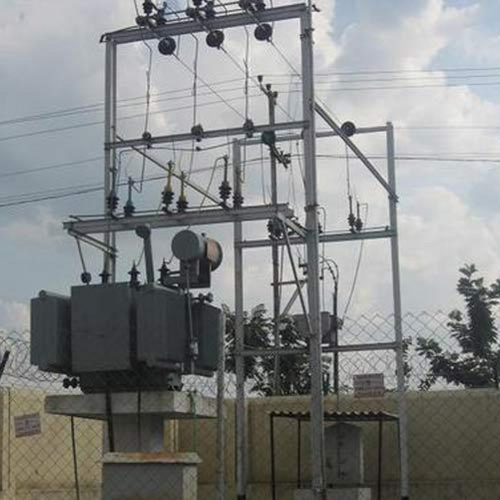 | LT Installation and Electrical Service LT Installation and Electrical Service LT Installation Electrical Services is a prominent player in the field of electrical installation, specializing in low-tension (LT) electrical... View product → |
Frequently asked questions
What should you verify before issuing an RFQ for HT-LT works?
Check that the contractor’s statutory licence, company identity and nominated electrical supervisor match the entity that will sign the contract. Then verify experience on comparable HT-LT installations, including voltage level, equipment type and project scale.
Which documents reveal how an HT-LT contractor will control the work?
Request the proposed single-line diagram, load schedule, cable schedule, protection and coordination study, equipment datasheets, method statements, inspection and test plan, work programme and safety plan.
How can you test whether a contractor manages the complete HT-LT interface?
Ask who owns each interface between the utility, incoming supply, transformer, HT switchgear, LT panels, protection systems, earthing, generator, UPS, BMS and building services. Require a responsibility matrix and interface schedule.
How should you compare HT-LT electrical quotations?
Compare the equipment make and ratings, quantities, installation scope, testing, civil works, statutory fees, exclusions, warranty and outage plan. Separate fixed scope from provisional items before comparing totals.
What must be confirmed before HT-LT energisation and handover?
Confirm responsibility for test reports, relay settings, insulation and continuity tests, earthing measurements, transformer tests, cable tests, authority coordination and energisation permits. Require as-built drawings, operation manuals, warranties, training records and final test certificates.
Related products
 | Commercial Electrical Contractors Commercial Electrical Contractors Navyashree Engineers, is a professionally managed class 1 Electrical contractors in South india. View product → |
 | Electrical Contractors Navyashree Engineers is a well-known leading electrical contractor with extensive knowledge in all realms of electrical works. View product → |
 | Industrial Electrical Contractor Industrial Electrical Contractor Navyashree Engineers regards quality as its lifeline, customer’s demand as its motivation, innovation and transformation as part of the development... View product → |
 | Electrical Design Consultants Navyashree Engineers provides high quality electrical system design & engineering capability, electrical project consultancy and construction... View product → |