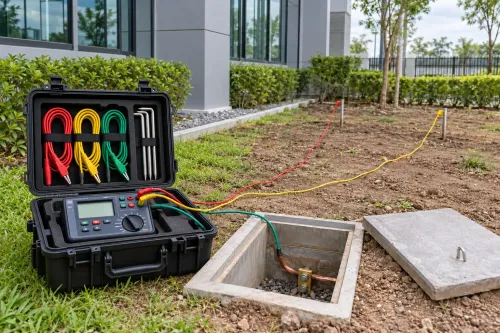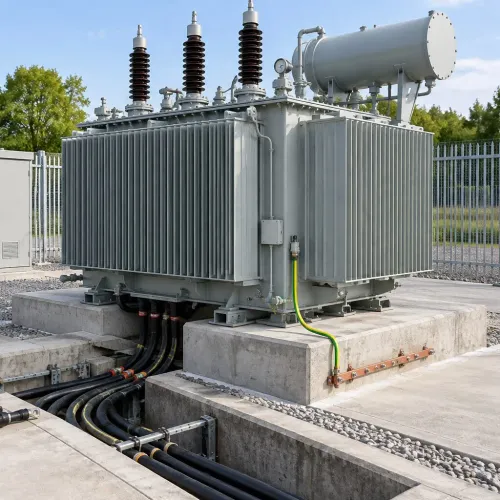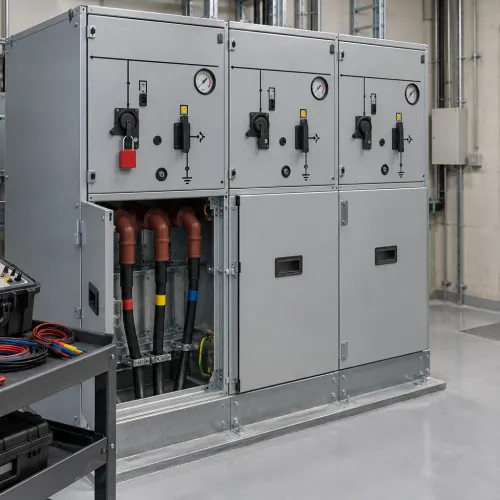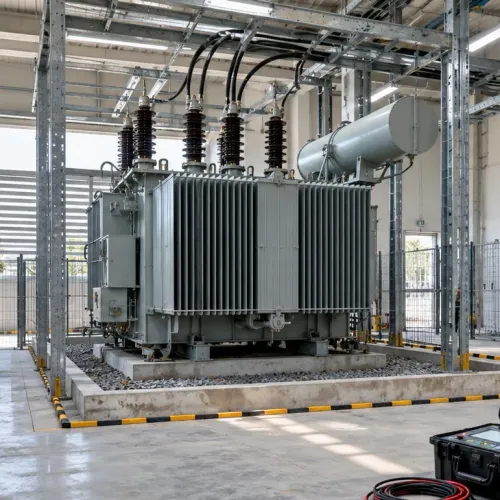
A turnkey electrification package is more than installing cables and energising equipment: it assigns responsibility for design, approvals, enabling civil works, procurement, testing and handover. By the end, you will be able to define the required scope, identify missing interfaces and compare a single-vendor proposal with separate design, supply and installation contracts.
Key takeaways
- Assign design, procurement, installation, testing and handover deliverables in the contract.
- Include transformers, panels, cables, earthing, protection, HVAC interfaces and civil enabling works.
- Name who supplies load data, drawings, permits, shutdown access and statutory approvals.
- Require test records, protection settings, as-built drawings, warranties and operator training before handover.
What the turnkey delivery sequence covers
A complete turnkey electrification package follows the system from predicted demand to stable operation, not merely from cable delivery to energisation. The contract should assign each stage and its deliverables:
1. Perform a load assessment covering connected load, demand factors, future expansion, motor starting, power quality and standby requirements.
2. Produce the concept design: supply arrangement, HT/LT architecture, transformer capacity, generator interface, voltage levels, metering and preliminary equipment locations.
3. Complete detailed electrical drawings, including single-line diagrams, load and cable schedules, layouts, earthing, lightning protection, voltage-drop, short-circuit and protection-coordination studies.
4. Obtain utility, BESCOM and CEIG submissions, approvals and inspection dates, with one named owner for every document and interface.
5. Procure approved equipment, then execute civil enabling works, containment, foundations, trenches, fire stopping and electrical installation.
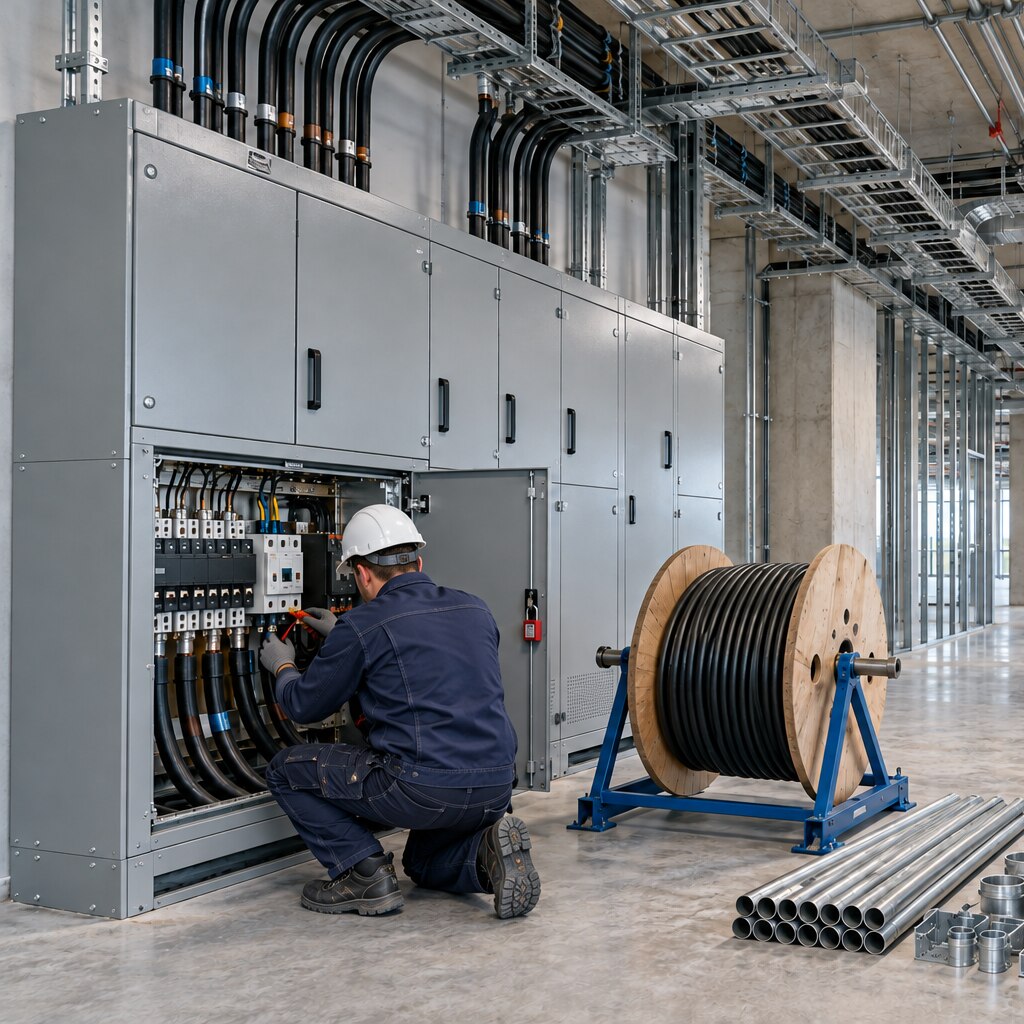
6. Inspect, test and commission cables, transformers, panels, relays, earthing, metering, synchronisation and control interfaces. Update protection settings using final installed data before energisation.
7. Energise in an approved sequence, verify alarms and interlocks, and train operators.
8. Close out with verified as-built drawings, test certificates, relay files, manuals, warranties, spares and asset records, followed by post-commissioning support for defects, settings changes and operational troubleshooting.
Which equipment and enabling works belong in the scope
A priced equipment schedule must cover the assets and the work that makes each asset installable, accessible and serviceable. Listing only cables and panels leaves the client paying later for foundations, interfaces and changeover work.
| Scope area | Items to list | Gap if omitted |
|---|---|---|
| HT/LT distribution | HT panels, RMUs, transformers, LT panels, bus ducts, cable trays, metering, APFC panels, protection relays and earthing | Ratings, protection and connection points remain unclear |
| Backup power | DG synchronisation panels and controls, generator incomer, interlocking, load sharing, fuel-system interfaces and changeover arrangements | Parallel operation or essential-load transfer may fail |
| Enabling civil work | Transformer foundations, equipment rooms, plinths, trenches, duct banks, cable pits, fencing, drainage, flood protection, ventilation and acoustic treatment | Equipment cannot be installed, cooled, accessed or replaced |
| Building interfaces | Wall penetrations, fire stopping, BMS or SCADA gateways, network cabling, protocols, point lists, time synchronisation, alarms and licences | Electrical commissioning finishes while monitoring remains untested |
| Changeover work | Existing-cable identification, temporary supplies, bypasses, demolition, disposal of oil or batteries and reinstatement | The facility cannot operate safely during cutover |
Specify access clearances, lifting routes, replacement paths and each party’s boundary with HVAC and structural works. Require verified as-built drawings, cable schedules, protection settings, relay files, test records and asset labels at handover.
What information and approval responsibilities must be assigned
Before pricing, the client must provide the sanctioned load, connected-load schedule, existing single-line diagram, site utility data, operating hours, expansion allowance, equipment locations and landlord or authority conditions. Confirm whether demand is stated in kW, kVA or contract demand; confusing these produces an undersized transformer or an unnecessary capacity application.
Request these client inputs:
- Latest architectural, civil and utility drawings, including cable routes, equipment rooms, access restrictions and transformer location.
- Existing bills, sanctioned-load letter, meter details, fault-level information and records of earlier BESCOM approval.
- Required completion date, outage restrictions, statutory contacts, land documents and the name of the person authorised to sign applications.
Assign responsibility in the contract, not in meeting minutes:
| Deliverable or interface | Contract owner | Required action or record |
|---|---|---|
| BESCOM load application and approval | Client as applicant; contractor prepares | Signed application, load sanction and approval letter |
| CEIG submission and inspection | Contractor | Approved drawings, test reports, inspection request and compliance closure |
| Utility submission and metering | Contractor | CT or meter data, utility correspondence and acceptance record |
| Site inspection readiness | Contractor | Checklists, certificates, punch-list closure and attendance records |
| Energisation request and permission | Contractor coordinates; utility authorises | Readiness certificate, outage approval, energisation permit and final switching record |
The client remains accountable for truthful demand, ownership documents and authorised signatures. The utility or CEIG retains statutory approval authority.
How testing, energisation and handover prove readiness
A system is ready for service only when acceptance evidence proves it safe, coordinated and monitorable. Continuity alone cannot prove safe operation, selectivity or monitoring.
Acceptance testing should match the installed equipment and design risks:
- insulation resistance testing, protective-conductor continuity, polarity, earth-electrode or loop-impedance tests, and phase rotation;
- breaker operation, relay injection against protection-coordination settings, and functional interlocks;
- generator or UPS transfer, RCD/GFCI operation, power-quality measurements, and alarm, metering and building-management points;
- verification of terminations, torque records, labels and panel schedules.
Before energisation, an authorised person approves the switching schedule, isolation boundaries and permit interface. Apply lockout/tagout, prove dead, review arc-flash information where applicable, and define emergency restoration and re-energisation steps.
Handover records must let an operator identify, operate and maintain each circuit:
- verified as-built drawings, single-line diagrams, load and cable schedules, equipment lists and asset identifiers;
- test certificates, relay files, final protection settings, commissioning results and defect closeout;
- manufacturer manuals, software licences, warranties, spare-parts lists and training records.
Where electrical turnkey work ends and ongoing services begin
Use a responsibility matrix and separate price schedules, even when one contractor supplies everything. The electrical installation ends at tested, energised and accepted assets; HVAC, facility management, maintenance and operational support begin only at stated interfaces, dates and service levels.
- HVAC: list equipment, controls, power points, BMS points, testing and balancing, with ductwork, refrigerant work and ventilation assigned separately.
- Facility management: identify assets, inspection frequencies, permissible outage windows, response and restoration targets, statutory records, escalation routes and exclusions.
- Preventive maintenance: state tasks, intervals, consumables, labour, reports and whether manufacturer or utility-owned equipment is excluded.
- Temporary works: price existing-cable identification, temporary supplies or generators, bypasses, lockout/tagout, demolition, disposal and reinstatement separately, with acceptance criteria.
- Warranty: distinguish installation defects, latent defects and operational failures, and name the warranty start date—successful energisation, practical completion or manufacturer delivery.
For an operating facility, make safe isolation a deliverable. Assign the isolation authority, proving-dead method, switching schedule, permit interfaces, arc-flash information and emergency restoration procedure; passed installation tests do not authorise energisation without an approved switching plan.
Define every BMS, SCADA or monitoring handover: point lists, protocols, alarms, time synchronisation, network ownership, cybersecurity, gateways, licences and test scripts. Otherwise the electrical system can be accepted while its alarms remain unverified.
When turnkey execution is the right delivery model
Choose one contractor when electrical, civil, controls and utility interfaces create more coordination risk than procurement savings. This is especially true under tight shutdown constraints, live-site work or phased occupancy, where one party must sequence isolation, temporary power, testing and energisation.
Use this decision procedure:
1. Define the outcome, not just the equipment: approved design, procurement, installation, utility coordination, commissioning, handover records and post-commissioning support. A single-vendor turnkey proposal is incomplete if it prices panels and cables but excludes approvals, temporary supplies or operating documents.
2. Build a scope responsibility matrix with the client, contractor and specialist trades on every line. Mark ownership for load studies, protection settings, trenches, plinths, fire stopping, BMS or SCADA points, network gateways, licences, CEIG or BESCOM submissions, inspections and energisation.
3. Compare exclusions against separate-contract risk. Check who provides demolition, cable identification, bypasses, generators, disposal, reinstatement, access, ventilation, flood protection and replacement clearances. An unpriced interface becomes a variation during the shutdown.
4. Require acceptance criteria beside every deliverable: test script, point list, alarm verification, drawing revision, warranty start date and handover signature. If comparing a proposal from Navyashree Engineers Private Limited, use the same matrix and criteria rather than comparing only the lump-sum price.
Use separate contracts when the owner already controls specialist interfaces, has enough engineering staff to coordinate them and can protect the programme from one contractor’s failure.
Related products
 | HT Installation and Electrical Service HT Installation and Electrical Service Navyashree Engineers team does the installation, testing & commissioning of overhead HT/ LT transmission lines. View product → |
 | LT Installation and Electrical Service LT Installation and Electrical Service LT Installation Electrical Services is a prominent player in the field of electrical installation, specializing in low-tension (LT) electrical... View product → |
Frequently asked questions
What does the turnkey electrification delivery sequence cover?
It covers load assessment, design, approvals, procurement, installation, testing, energisation, commissioning and handover, with deliverables assigned at each stage.
Which equipment and enabling works belong in a turnkey electrification scope?
The scope can include transformers, HT and LT panels, bus ducts, cables, cable trays, earthing, lightning protection, metering, controls, HVAC interfaces and the civil works needed to install and protect them.
Who is responsible for information and approvals?
The contract must identify responsibility for load schedules, existing drawings, equipment data, utility applications, permits, shutdown coordination, inspections and statutory approvals.
What proves an electrical system is ready for energisation and handover?
Signed test results, protection settings, inspection records, approved energisation procedures, as-built drawings, asset registers, warranties, operating manuals and operator training provide the evidence.
Where does turnkey electrical work end and ongoing service begin?
Turnkey work ends after agreed commissioning, documentation, training and acceptance. Preventive maintenance, fault response, monitoring, compliance testing and lifecycle upgrades require a separate ongoing-services scope.
Related products
 | Commercial Electrical Contractors Commercial Electrical Contractors Navyashree Engineers, is a professionally managed class 1 Electrical contractors in South india. View product → |
 | Electrical Design Consultants Navyashree Engineers provides high quality electrical system design & engineering capability, electrical project consultancy and construction... View product → |
 | Industrial Electrical Contractor Industrial Electrical Contractor Navyashree Engineers regards quality as its lifeline, customer’s demand as its motivation, innovation and transformation as part of the development... View product → |
 | Electrical Contractors Navyashree Engineers is a well-known leading electrical contractor with extensive knowledge in all realms of electrical works. View product → |